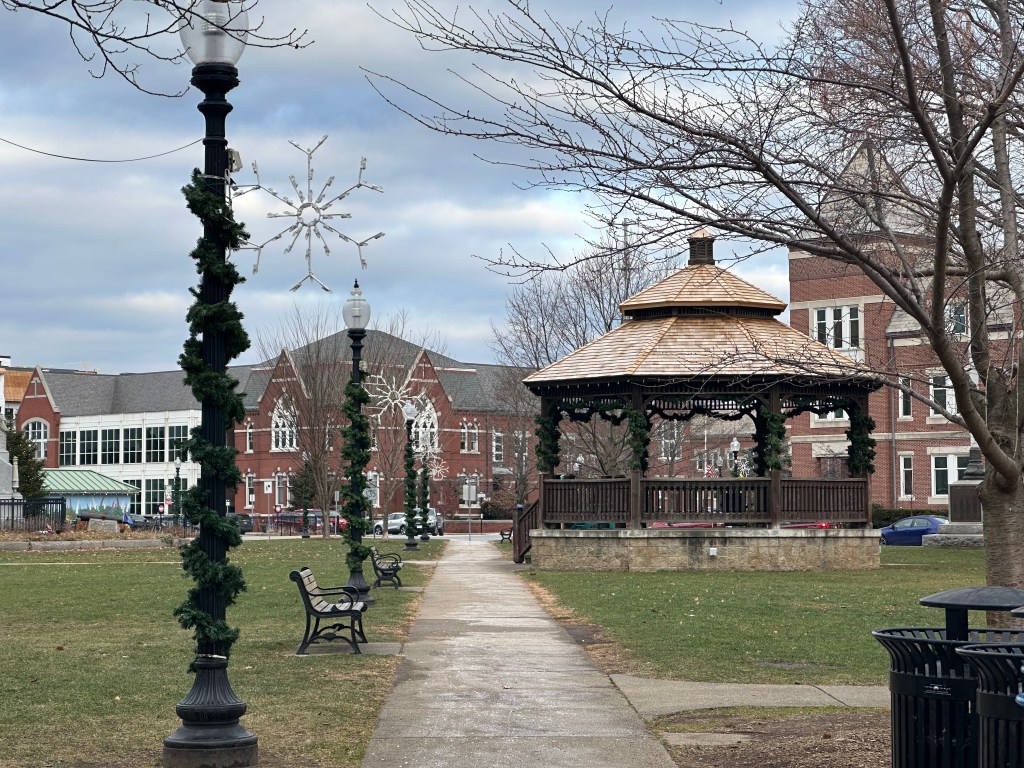
Residents clash over a policy aimed at balancing community trust and public safety in the midst of a national immigration debate.
By Heidi Christen
December 12, 2024
Natick, Mass. — The small town of Natick finds itself at the center of a heated debate over the proposed “Welcoming Communities Policy,” which seeks to formalize the town’s existing practices regarding immigration. Intended to foster trust between local authorities and immigrant communities, the policy has drawn both strong support and opposition, reflecting broader national tensions over immigration issues.
The Policy Debate Goes Viral
The debate over Natick’s proposed “Welcoming Communities Policy” has also gained significant traction on social media and news outlets, amplifying the tensions surrounding the issue. Various online platforms and local news agencies have taken up the story, often framing the discussion by labeling the policy as a step toward Natick becoming a “sanctuary town.”
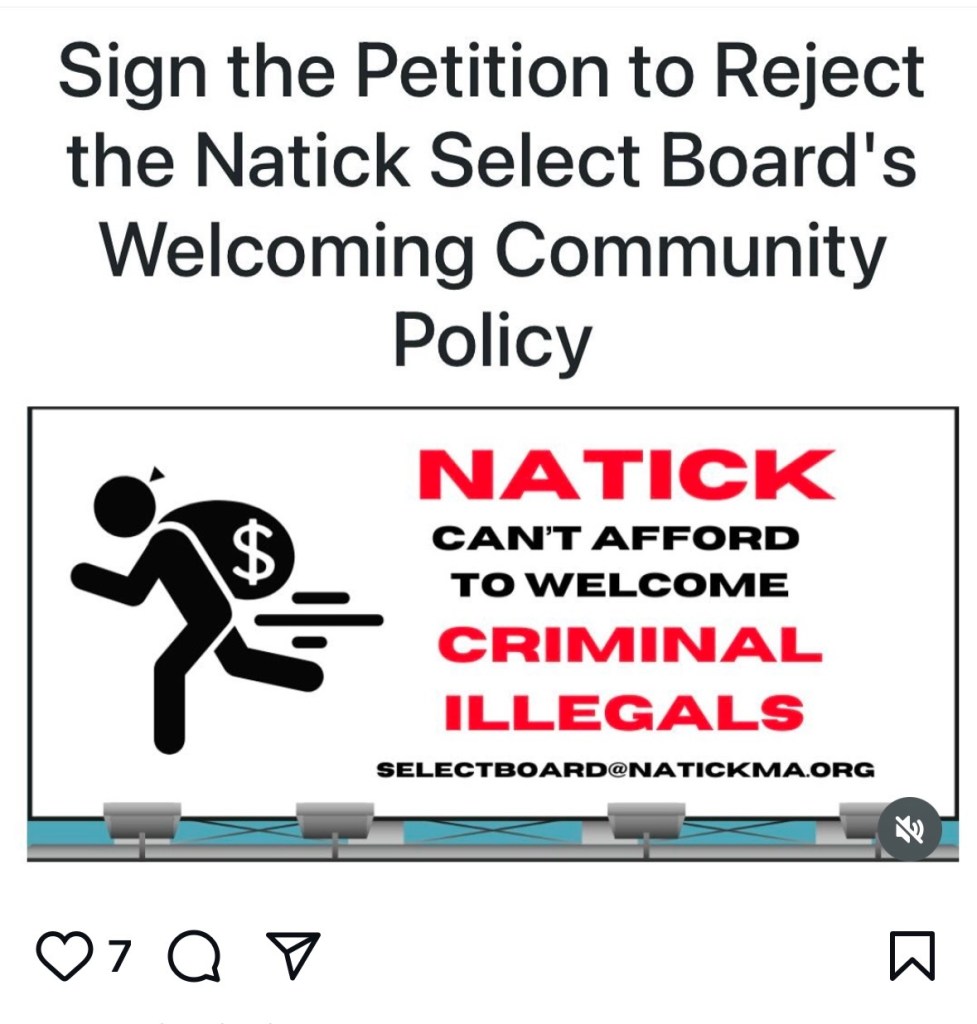
In response to these concerns, the Select Board clarified during the December 11 meeting that it was not their intent to establish a sanctuary city. Instead, they emphasized that the policy was designed to formalize existing practices and ensure cooperation between local law enforcement and immigrant communities without stepping into federal immigration enforcement. The board walked through the specifics of the policy, reinforcing that its goal is to build trust and inclusivity, not to undermine public safety or resources.
Policy Details
The draft policy limits town officials’ involvement in federal immigration enforcement by prohibiting them from detaining individuals solely on immigration grounds, asking about immigration status, or collecting related information unless required by law. It aims to ensure compliance with federal and state laws while reinforcing the town’s commitment to inclusivity.
According to discussions at the Natick Select Board meeting on December 11, the policy’s goals include:
- Encouraging cooperation with law enforcement, particularly from immigrant communities, to enhance public safety.
- Protecting the town from legal liability by formalizing existing practices.
Community Engagement and Feedback
The policy has been shaped by community input. Public feedback was gathered via surveys, including over 770 responses through the Flash Vote tool. Key findings from the responses indicated significant support for the policy’s goals and widespread opposition to using town resources for federal immigration enforcement.
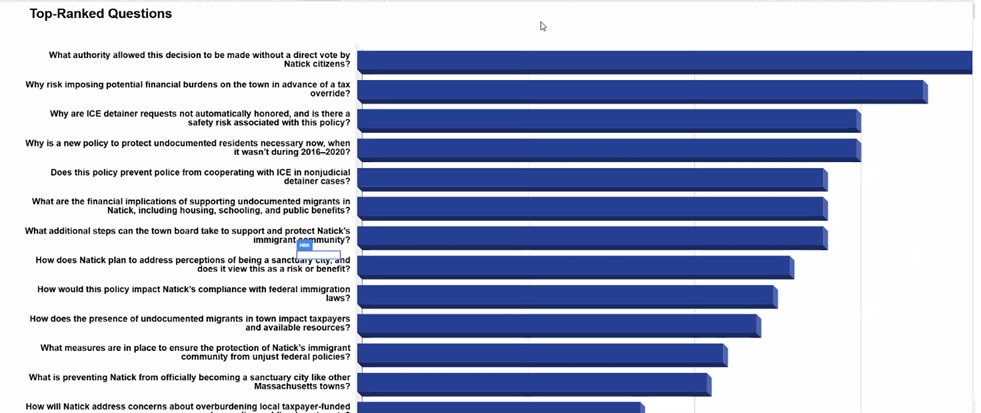
Supporters emphasized that the policy aligns with Natick’s values of trust and inclusivity while ensuring compliance with state and federal laws. However, critics voiced concerns about potential financial impacts, public perception as a “sanctuary city,” and the timing of the policy discussion.
The Select Board addressed these concerns during the meeting, with Chief of Police James Hicks clarifying the distinction between ICE detainers and judicial warrants. He explained that ICE detainers are voluntary requests from federal immigration authorities to hold individuals beyond their release date, while judicial warrants are issued by a judge in connection with criminal cases. Chief Hicks emphasized that the policy would not compel local law enforcement to detain individuals based solely on immigration status but would instead focus on cooperation with federal authorities in cases that involve criminal activity.
Voices of Concern
Opponents of the policy argue that it could jeopardize public safety. Paul Piccioli, a lifelong Natick resident, expressed concern, saying, “This issue affects us all, yet the current process excludes broader community input. A decision of this magnitude deserves a town-wide vote, as five individuals cannot represent the diverse perspectives of Natick’s residents. We must ensure the policy aligns with the best interests of all citizens.”
Adding to the tension, Select Board Chair Kathryn Coughlin became the target of vandalism, with “Deport Illegals” spray-painted on her car. Some residents expressed concerns that similar policies in other towns have strained resources and led to unintended consequences, including increased crime.
Supporters: Building Trust and Community
Proponents of the policy argue that it reflects Natick’s longstanding values and strengthens community trust. Miriam Hernandez Jennings said, “As an immigrant from Chile, I understand the importance of feeling safe and supported in a community. This policy is not just about immigrants; it’s a statement about who we are as a town. By adopting it, we show that we are a welcoming community, and that we care for all those who live here.”
What’s Next
The Select Board is expected to revisit the draft policy at its next meeting on December 18, with a vote anticipated by the end of the year. Chair Kathryn Coughlin urged residents to engage in respectful dialogue, saying, “We need a shared vocabulary to address this important issue.”
As Natick debates the policy’s impact, the discussion reflects broader national conversations on balancing inclusivity and public safety. The decision’s significance could extend beyond the town, especially with a new presidential administration potentially reshaping immigration laws and enforcement. While local governments maintain autonomy, federal policy shifts could influence how towns address immigration issues.
No matter the outcome, Natick’s decision will likely serve as a benchmark for how small communities handle the complex intersection of immigration policy and local autonomy. The town’s choice may set a precedent for other communities in Massachusetts and beyond, as towns and cities continue to struggle with the balance of community trust, public safety, and federal policies that seem to change with each election cycle.
 Raising Nana
Leave a comment